Bedroom storage ideas can completely change how a room feels. In Australian homes, the best storage solutions make the bedroom calmer, cleaner, and easier to live in every day.
Use under-bed storage to save space
Many Australians live in apartments, townhouses, or older homes where the lounge room is the smallest room in the house. But a small living room, styled thoughtfully, can feel just as inviting and generous as a much larger space. The secret isn’t in the square metreage — it’s in the decisions you make about colour, furniture, light, and layout.
Here’s the room-by-room approach that interior designers actually use, applied specifically to compact Australian living spaces.
Choose a Light, Cohesive Colour Palette
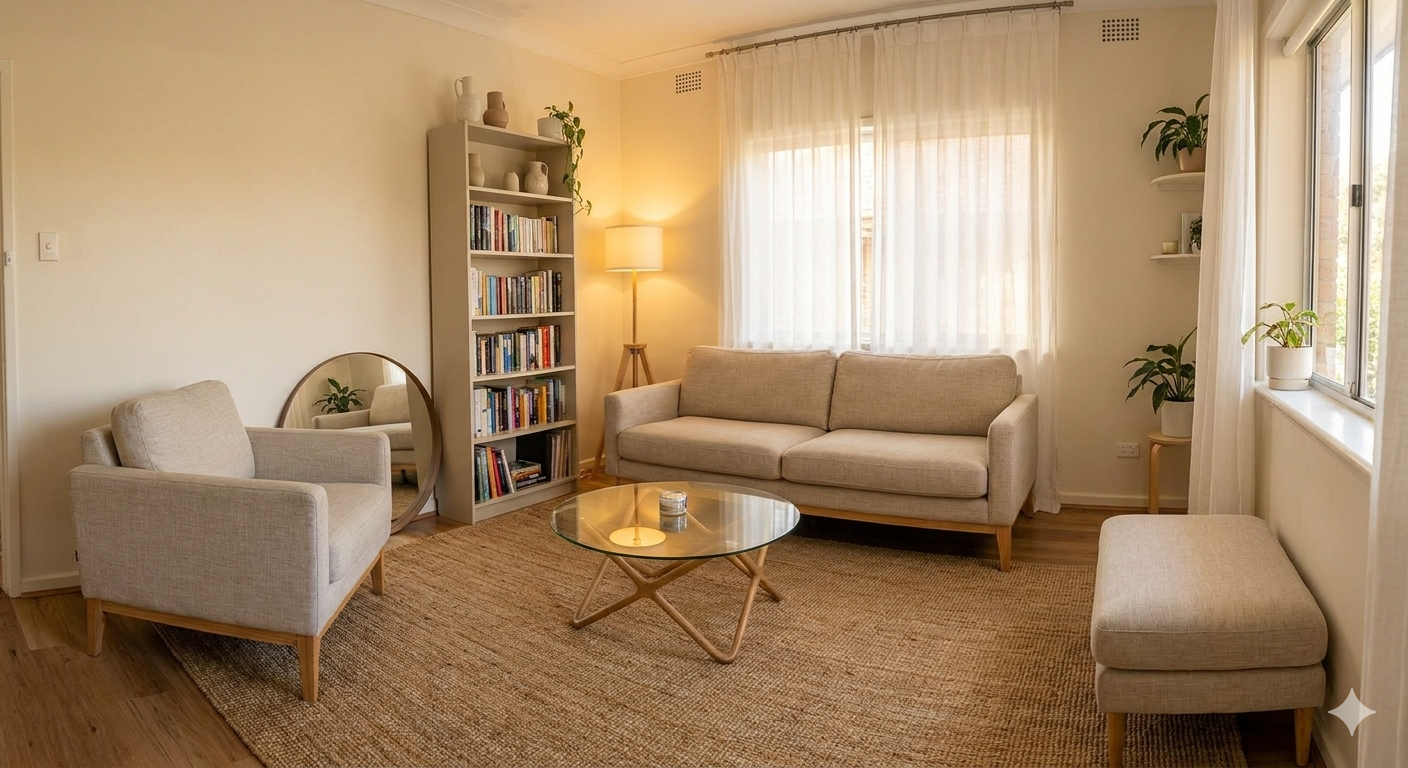
Light walls are the first and most important decision in a small room. White, soft cream, warm linen, and pale grey all reflect natural light and push walls outward visually. If you want a richer tone, limit it to one feature wall — keep the other three neutral so the room doesn’t close in.
Extend the colour palette to your furniture and textiles. A tonal, monochromatic approach — different shades of the same colour family — creates a seamless, spacious feel. High-contrast combinations (very dark and very light together) can visually chop the room into smaller zones, which works against you in a compact space.
Choose Furniture with Exposed Legs
One of the most effective tricks in small-space design is selecting sofas, armchairs, and side tables with visible legs. When you can see the floor underneath furniture, the room feels more open and airy than it actually is. Low-profile, bulky furniture on a plinth or skirted base does the opposite — it visually anchors heavy weight to the floor.
For a compact living room, consider: a two-seater sofa (rather than a three-seater), one generously sized armchair, and a nesting table or glass coffee table instead of a solid timber block. Leave breathing room between pieces.
Use a Rug That’s Larger Than You Think You Need
This is one of the most common mistakes in small rooms. A tiny rug in the centre of the floor makes the space feel more fragmented and smaller — not larger. Choose a rug that’s large enough for at least the front legs of all your seating to rest on. It defines the zone without interrupting the visual flow.
Hang Curtains High and Wide
Mount curtain rods as close to the ceiling as possible and extend them 20–30 cm beyond the window frame on each side. This makes windows look dramatically larger, draws the eye upward to create height, and lets in maximum light when curtains are open. Use sheer or linen fabrics in a colour close to your wall tone.
Add a Large Mirror
A single large mirror — leaning against the wall or hung opposite a window — effectively doubles the perceived size of the room. It bounces light, reflects depth, and creates the illusion of a second space beyond. Floor-to-ceiling mirrors on a blank wall can be transformative in a small lounge.
Use Vertical Space
When floor space is at a premium, go vertical. Tall bookshelves and floor-to-ceiling shelving draw the eye upward and create a sense of height. Wall-mounted floating shelves above the TV, sofa, or along a hallway wall free up the floor without sacrificing storage.
Layer Your Lighting
A single overhead light makes any room feel flat. Add a floor lamp in a dark corner, a table lamp on a side table, and candles or soft LED strip lighting for evening ambience. Aim for three to four light sources at different heights, all at 2700K for a consistently warm, inviting glow.
Edit What’s on Display
In a small room, every object competes for visual attention. The fewer things on display, the more spacious the room feels. Keep surfaces clear except for a few well-chosen pieces — a plant, a candle, a sculptural object. What you leave out is as important as what you put in.
Discover NestAura’s range of bedroom storage solutions — from under-bed drawers to wardrobe organisers — designed for Australian homes and delivered free Australia-wide on qualifying orders.