Australian interior design has a distinct character — relaxed yet considered, connected to the natural landscape, and adapted to a climate that demands different solutions from the Northern Hemisphere homes that dominate design media. What works in a Scandinavian apartment or a New York loft doesn’t always translate to a Queensland Queenslander or a Melbourne terrace. Here’s what actually works in Australian homes right now, and why.
Natural Materials as the Foundation
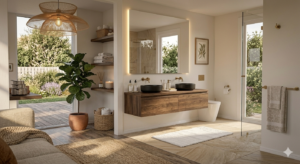
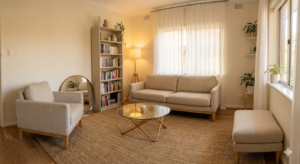
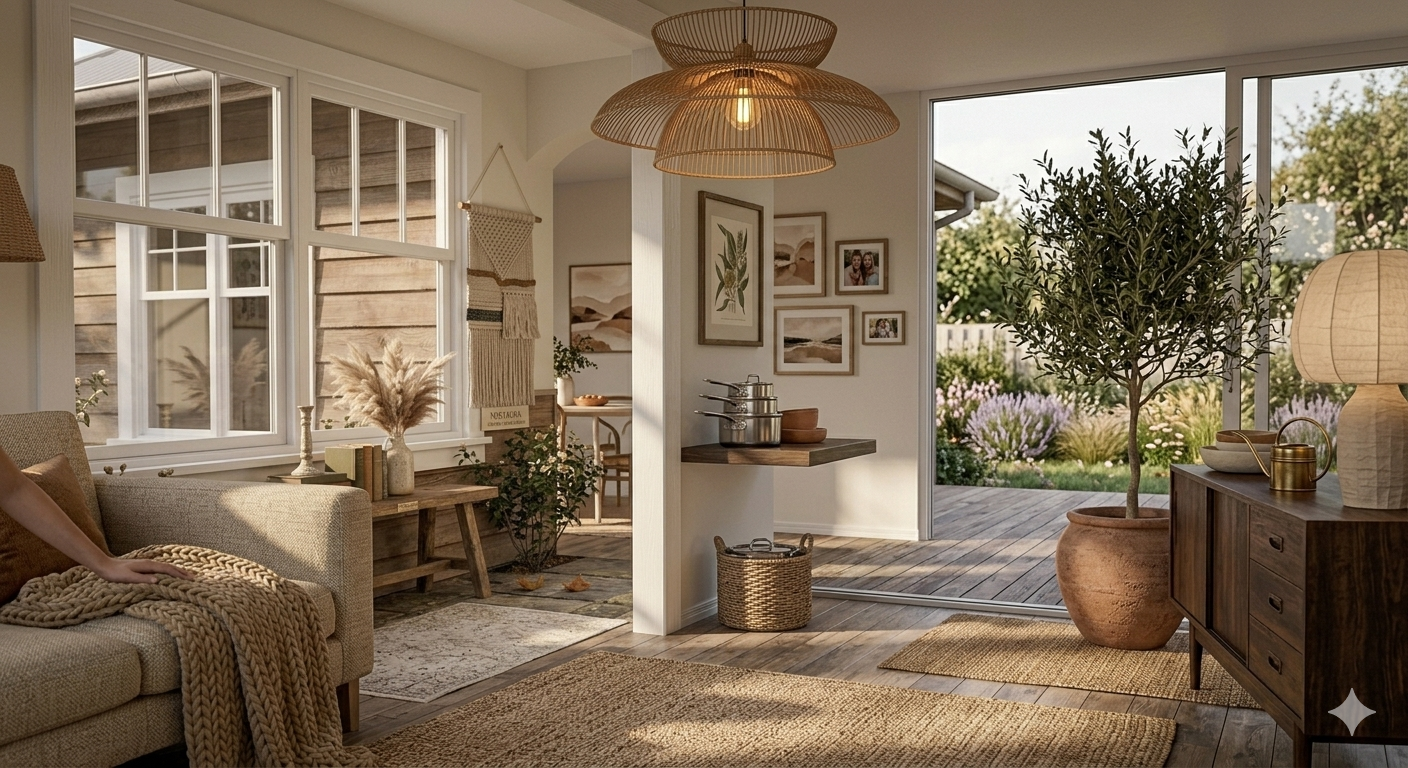
The materials that have always worked in Australian interiors — timber, stone, linen, rattan, leather, cotton — continue to be the most enduring choices. They’re connected to the landscape, they age beautifully, and they work across every Australian climate zone. Natural materials also layer well together: a jute rug under a timber coffee table with a linen sofa and terracotta accessories creates a cohesive, grounded palette without any effort.
The trend toward overly synthetic, high-gloss, or hyper-minimal interiors has softened. What’s replacing it is a warmth-first approach — rooms that feel lived in and genuinely comfortable, not just photogenic.
Warm Neutral Palettes
The cool grey-and-white palette that dominated Australian homes through the 2010s has given way to warmer neutrals: warm white, sand, clay, terracotta, sage green, and dusty blush. These tones work particularly well in Australian light — our bright, sunny conditions can make cool greys look stark or even bluish. Warm tones absorb light more gently and create rooms that feel comfortable at any time of day.
Bringing the Outdoors In
Indoor plants are not a trend — they’re a fundamental part of Australian interior design and have been for decades. What’s changed is scale: larger statement plants (fiddle-leaf figs, monstera, olive trees in oversized pots) rather than a collection of small succulents. One well-chosen large plant in a beautiful pot does more for a room than ten small ones on a windowsill.
Mixing Old and New
The most interesting Australian interiors today aren’t entirely new or entirely vintage — they combine pieces from different eras. A vintage timber sideboard alongside a contemporary sofa. A heritage ceramic lamp on a modern floating shelf. This approach creates rooms with character and personality rather than the “showroom” feel of a space where everything came from the same source.
Vintage and secondhand markets, garage sales, and estate auctions are excellent sources for unique pieces. Buy the best quality you can find in these spaces — solid timber, quality upholstery, interesting forms — and don’t be afraid to restore or repaint.
Statement Lighting
Lighting is having a moment in Australian interiors, and rightly so. A beautiful pendant light above the dining table, a sculptural floor lamp in the living room corner, or a pair of bedside wall sconces elevates the entire room without requiring a renovation. Prioritise lighting as a design element, not an afterthought. Warm-toned LEDs (2700K) in every fixture, and dimmers wherever possible.
Texture Over Pattern
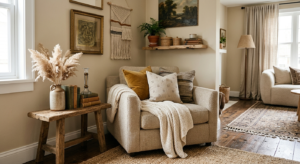
Rather than bold printed patterns (which date quickly), the most enduring approach to visual interest in Australian homes is texture. A boucle armchair. A chunky knit throw. A rattan side table. A linen cushion with a subtle woven stripe. These create tactile richness that makes a room feel layered and sophisticated without any single element demanding too much attention.
Art and Personal Objects
The shift away from generic décor toward genuinely personal objects is one of the most positive trends in Australian homes. Original artwork — even affordable prints from emerging Australian artists — creates a room that reflects the people who live there. Books displayed on shelves, objects brought back from travels, inherited pieces given new context. These elements make a house feel like a home.
Find beautifully curated home décor pieces at NestAura’s online store — Australian-focused, quality-led, and delivered across the country with free shipping on qualifying orders.